
Our partnership programme offers flexible, customisable solutions to meet you and your client bases LEI needs.

Find the help and support you need for your LEI from our highly trained support staff
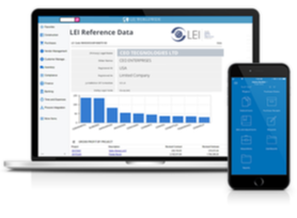
LEI Worldwide are pleased to present RAMP 2.0 an LEI management platform designed to allow Financial Institutions easily manage LEIs at scale. RAMP allows you to improve your KYC processes, issue and manage clients LEIs while centralising your LEI portfolio and cutting costs by replacing outdated methods.
The global LEI system (GLEIS) is the first global database providing unique identification information of legal entities participating in financial transactions all across the globe.
The database forms an index of legal entities which is publicly accessible and completely free of charge to use. Each entity in the database is assigned its own, unique 20 digit code by which it is identified in many business activities and transaction reporting systems.
All legal entities such as limited companies, funds, trusts, banks or government bodies can obtain an LEI.
This type of information has never been so accessible and has many benefits to the global economy, including transparency, risk management and cost reduction. Ultimately, having an LEI ensures that a particular legal entity is a registered entity. This provides regulators an organized and accessible database of market participants.
The LEI format is standardized. This means any given LEI record contains the same basic company information which is corroborated at a local level by Registration Authorities and it is renewed annually ensuring the data contained within is accurate, up to date and reliable.
An LEI record also provides Level 2 data. This means the parent structure of an organization may be reported, shedding light on complicated corporate structures. This ultimately maps out the global financial ecosystem and allows everybody to see who is whom, and who belongs to whom.
All this information was previously available at a local level, but never in a centralized, reliable and up to date database.
To date, many organisations still use, outdated, manual methods when it comes to entity identification, KYC and client onboarding.
By adopting the standardized LEI as a common global identifier it can have a profound effect on the cost and efficiency of a wide range of business use cases throughout many industries.
McKinsey recently published a report stating that the LEI system can save the banking industry between 2-4 billion USD annually in KYC checks.
This is quickly becoming a reality as over 1.6 million companies around the world have obtained their LEIs as of April 2020.
“The LEI system connects the dots to create a visual representation of the global financial marketplace, moreover it provides security and transparency to its participants and regulators.“
The global LEI system was born out of the Global Financial Crisis (GFC) in 2008 when it became apparent that there was a greater need for transparency and security.
In the wake of the Lehman Bros debacle the Group of Twenty (G20) birthed the concept of having a standardized, central framework by which we could easily link market participants to financial transactions, thus increasing overall visibility.
With the oncoming of COVID-19 and negative oil prices at the time of writing this (April 2020) we are preparing for another similar recession. This time we are more prepared.
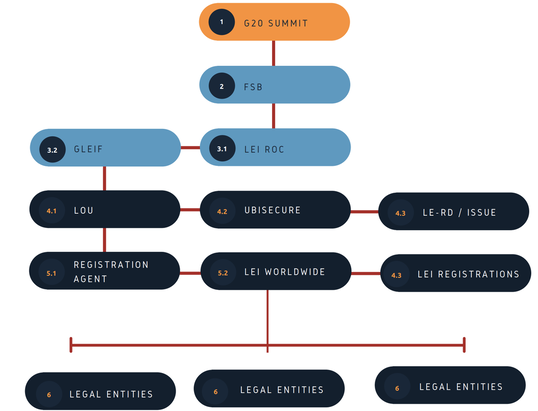
The G20 appointed the Financial Stability Board (FSB) to provide recommendations and set the grounds for a new organization to oversee the implementation of this new system. One centralized source of information, that contains vast amounts of attainable, high quality data.
Officially established in June 2014, the Global Legal Entity Identifier Foundation (GLEIF), a non-profit organization was created to fill this role. GLEIF oversee the operational integrity of the global LEI system. GLEIF is managed by the LEI Regulatory Oversight Committee (LEI ROC) which is made up of representatives from different jurisdictions worldwide.
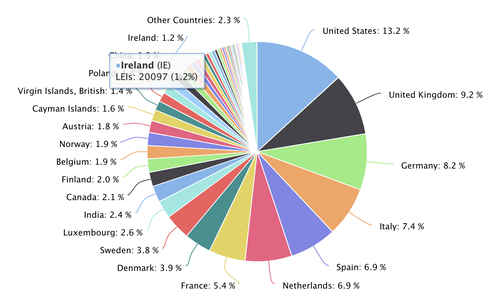
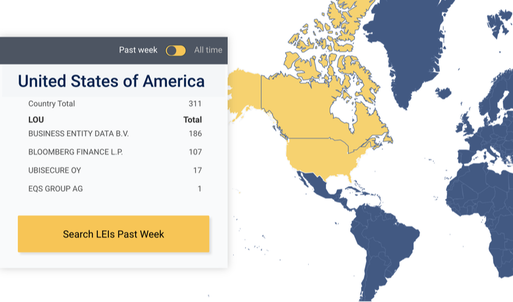
GLEIF collect and publicise all LEI data in concise and intuitive monthly reports. The GLEIF statistics page provides valuable insights and breakdowns of LEI issuance by country, issuer and country type (figure 1.0 below). LEILEX also provide a useful map which allows you to see weekly LEI issuance rates (figure 1.2). You can find this here.
Figure 1.0: GLEIF Statistics Report
Figure 1.1: LEI Map
The GLEIF website states that amongst other things, it is responsible for:
GLEIF regulates the Local Operating Units (LOUs) of which there are 34. LOUs are responsible for issuing LEI Codes. LOUs such as Ubisecures RapidLEI may then partner with an Official GLEIF Registration Agent (RA) such as LEI Worldwide.
The role of the RA is to provide support to the market participants who need an LEI for their organization. This helps disseminate important information to the users of the LEI, provide closer and wide scale customer support and create healthy competition which keeps service levels high and prices down. The RA usually manages LEIs on behalf of companies who may have a large portfolio and require expertise management and advice in the area.
Registration agents also play an important role in promoting the global LEI system, by creating content, encouraging dialogue and driving innovation in the LEI ecosystem.
Examples of companies that require an LEI Code, are all financial intermediaries, funds and trusts, banks and financial institutions, any legal entity that is listed on a stock exchange or that issues debt, securities or equity.
The LEI is mandated by a number of EU directives such as EMIR , MiFIR & MIFID II & SFTR. The US also have similar requirements such as the Dodd Frank Act, the OFR, the Federal Reserve and the Securities & Exchange commission (SEC).
LEI requirements vary depending on the country, legal jurisdiction or industry. It is the prerogative of the authorities acting in individual jurisdictions to mandate the use of LEIs. You can find a list of LEI regulations by country here.
The process of applying for an LEI is relatively simple and cost effective. The benefits of obtaining an LEI include:
You can click here to complete the 5 minute online LEI application form. Once the application is submitted, simply choose your preferred payment method and complete the application. LEI Worldwide use our payments provider STRIPE and PayPal. We also offer the ability to complete a bank transfer or swift payment in any currency.
The price for a new LEI is available in a number of different packages starting at €70. This includes discounts for bulk registrations, multi-year (2-5 years) registrations and LEI resellers special prices. Contact for more information.
If you would like to find out more about the global LEI system, or receive support from our team of experienced industry professionals please contact us today at info@lei-worldwide.com.
To apply for your own LEI or on behalf of a legal entity, please select the option from the buttons below.

Number 9 Pembroke Street Upper, Dublin 2, D02 KR83

18 Finsbury Square Alphabeta, London EC2A 1AH

S No 203/1 PL 1/4A B12 APPT, NR UY Patil College Cinchwadgoan, Chinchwad Mulshi Pune, Pune 411033, Maharashtra, India
Official partner and registration agent to ubisecure rapidlei
LEI Worldwide facilitate entity identification in the global financial system, capital markets and private sector. We make the process accessible and simple for Legal Entities to obtain Legal Entity Identifier numbers. By doing this we help facilitate the global allocation of LEI numbers. It is our mission to be the one point of contact globally between Legal Entities & LOU’s and ensuring the LEI becomes the Worlds most important identifier.
Supported By

Payment