

Commercial Partnerships
Our partnership programme offers flexible, customisable solutions to meet you and your client bases LEI needs.

Help Centre
Find the help and support you need for your LEI from our highly trained support staff
Our partnership programme offers flexible, customisable solutions to meet you and your client bases LEI needs.
Find the help and support you need for your LEI from our highly trained support staff
Asset managers operate across a complex regulatory environment. Funds, sub-funds, management companies, AIFMs, UCITS structures, SPVs and counterparties may all require accurate legal entity identification across trading, reporting and compliance workflows.
A Legal Entity Identifier (LEI) provides a globally recognised reference point for identifying legal entities participating in financial transactions.
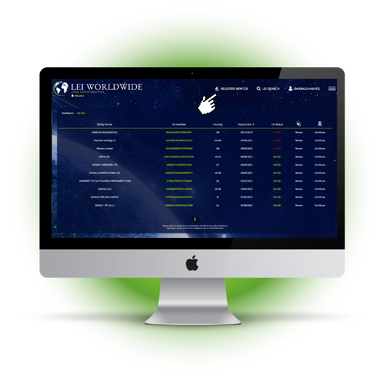
For asset managers, LEIs are not just an administrative requirement. They sit inside core reporting, trading and operational processes. When an LEI is missing, expired or recorded incorrectly, it can create delays across transaction reporting, onboarding, fund launches and counterparty workflows.
Asset managers often manage multiple legal entities across different jurisdictions. A single group may be responsible for a management company, investment funds, sub-funds, feeder funds, special purpose vehicles and other legal structures.
Under MiFID II and MiFIR, investment firms must identify legal entity clients in transaction reports. This created the well known “no LEI, no trade” principle. If a legal entity client does not have a valid LEI, trading can be delayed or blocked.
Under EMIR, counterparties to derivative contracts are identified using LEIs where they are legal entities. This is especially relevant for funds and managers using derivatives for hedging, exposure management or investment strategy.
Under SFTR, securities financing transactions require detailed reporting to trade repositories. LEIs support the identification of counterparties, issuers and other entities within the reporting chain. For asset managers, this means LEI data must remain accurate, active and aligned across trading, reporting and compliance systems.
These issues are small in isolation. At scale, they become operational risk.
A lapsed LEI can interrupt trading. Incorrect fund data can create reporting inconsistencies. Poor visibility across a fund platform can leave compliance teams reacting instead of controlling the process.
Asset managers should treat LEI management as part of data governance, not a once-off registration task.
For asset managers, the value is not just getting an LEI issued. It is having a reliable process that keeps LEI data active, accurate and available when trading, reporting or onboarding depends on it.
Many investment funds need an LEI because they participate in financial transactions or appear in regulatory reporting workflows. This commonly includes UCITS funds, AIFs, ETFs, sub-funds and SPVs.
In many cases, yes. If a sub-fund is treated as a separate reporting or transacting entity, it may require its own LEI. This depends on the legal structure and the regulatory or trading requirement involved.
An LEI must remain active and up to date. If an LEI lapses, trading, transaction reporting or counterparty onboarding can be affected.
Yes. LEI Worldwide supports bulk LEI registration, renewal and monitoring for asset managers, administrators and fund platforms managing multiple entities.
Legal entity clients must be identified with an LEI for MiFID II and MiFIR transaction reporting. This is why many firms apply a “no LEI, no trade” approach.
Yes. EMIR reporting uses LEIs to identify legal entity counterparties to derivative contracts.
Yes. SFTR reporting relies on structured entity identification, and LEIs are used to identify parties involved in securities financing transactions.

Number 9 Pembroke Street Upper, Dublin 2, D02 KR83
18 Finsbury Square Alphabeta, London EC2A 1AH
S No 203/1 PL 1/4A B12 APPT, NR UY Patil College Cinchwadgoan, Chinchwad Mulshi Pune, Pune 411033, Maharashtra, India
Official partner and registration agent to ubisecure rapidlei
LEI Worldwide facilitate entity identification in the global financial system, capital markets and private sector. We make the process accessible and simple for Legal Entities to obtain Legal Entity Identifier numbers. By doing this we help facilitate the global allocation of LEI numbers. It is our mission to be the one point of contact globally between Legal Entities & LOU’s and ensuring the LEI becomes the Worlds most important identifier.
Awards



Supported By




Payment